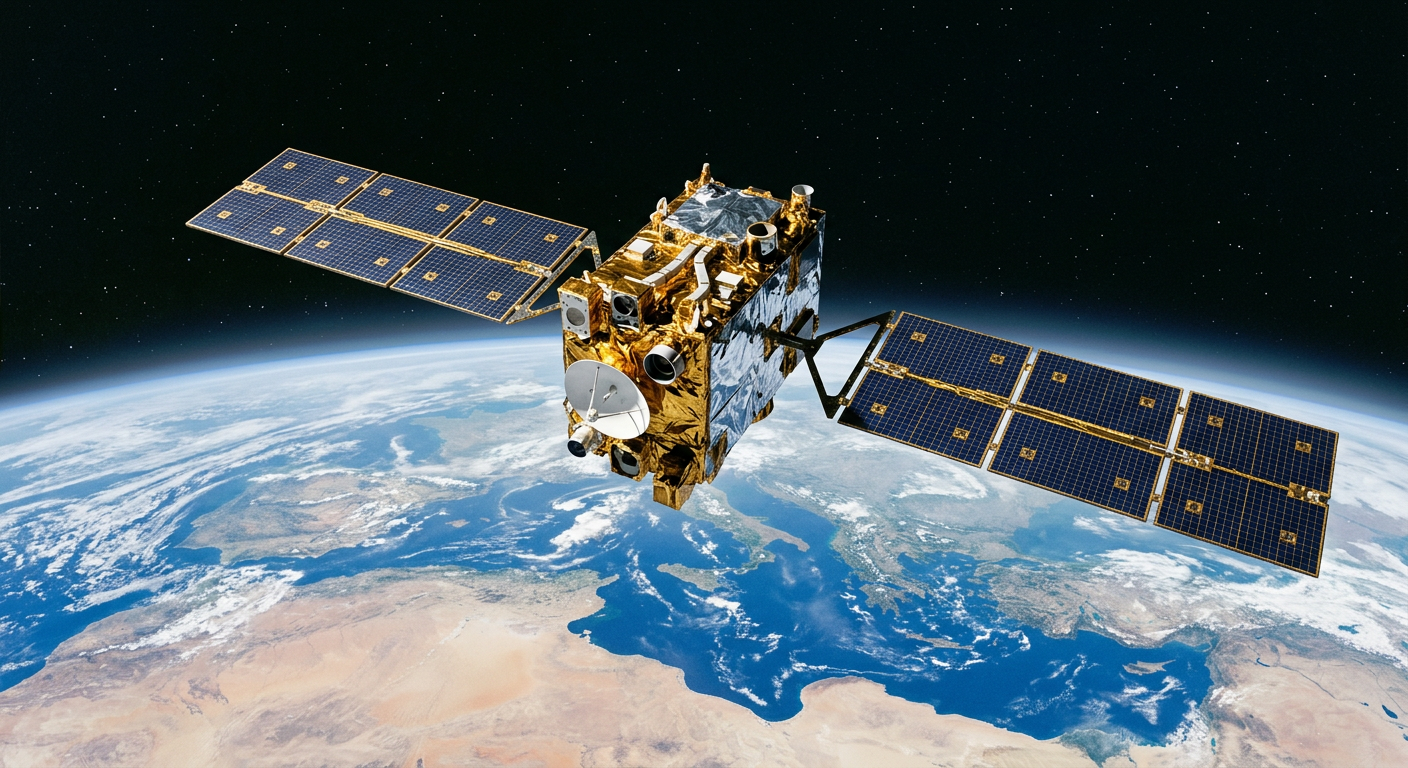
Orbit · Satellites
What would happen if Earth lost all its satellites?
No maps, no forecasts, no card payments. The quiet infrastructure above everything.
- active satellites in orbit
- 10,000+
- geostationary altitude
- 35,786 km
- GNSS satellites needed for a position fix
- 4
01
The first hour
Phones lose their location. Ride-hailing, deliveries and aircraft navigation degrade. Then the less obvious failures begin: power grids and banks rely on precise timing signals from navigation satellites to stay in sync.
02
The first week
Weather forecasts lose their eyes. Storm warnings arrive late. Remote clinics and mobile money services that depend on satellite links go dark. Farmers lose crop and rainfall monitoring at the start of the season.
03
Why it matters
Satellites are not one system but many: navigation, communications, weather and Earth observation, each in different orbits. Understanding how they fit together is how engineers and policymakers decide what to protect first.
Your mission
3 Ops, about 6 minutes
- 1Tactical · MATCHMatch service to satellite
- 2Tactical · PRIORITISEPrioritise the restoration
- 3Technical · BUILDBuild a replacement CubeSat
Evidence you can earn
Competencies this mission builds
- Satellite Systems UnderstandingKnowing how satellites are built, what they do and what depends on them.Up to L2
- Systems PrioritisationDeciding what matters first when systems depend on each other and resources are limited.L1
- Space Governance & Policy ReasoningReasoning about the rules, responsibilities and shared risks of using space.L1
Leads toward Satellite Systems Engineer, GNSS Engineer, Space Policy Analyst.