Space Systems & Satellite Technology
Orbital Analyst
Predicts where spacecraft and objects are, and where they will be.
0 of 6 signature competencies evidenced. Ready means Level 3 on each.
Signature competencies
Trajectory Reasoning
Reasoning about where an object is going, when, and what could change its path.
Not yet evidenced
Orbital Calculation
Using quantities like speed, distance and period to put numbers on motion in space.
Not yet evidenced
Observation & Anomaly Detection
Noticing what is different, moving or out of place in images, signals and data.
Not yet evidenced
Simulation & Model Reasoning
Using models to test decisions before reality does it for you.
Not yet evidenced
Scientific Data Interpretation
Reading charts, readings and trends to reach defensible conclusions.
Not yet evidenced
Risk Assessment
Weighing likelihood and consequence to decide when and how to act.
Not yet evidenced
Why it matters
Launches, dockings and collision avoidance all depend on precise orbit prediction.
Technical foundations
- Orbital mechanics
- Coordinate systems
- Python
Mentors in this field
UNIVAST mentors with experience relevant to becoming a Orbital Analyst.
Engineering
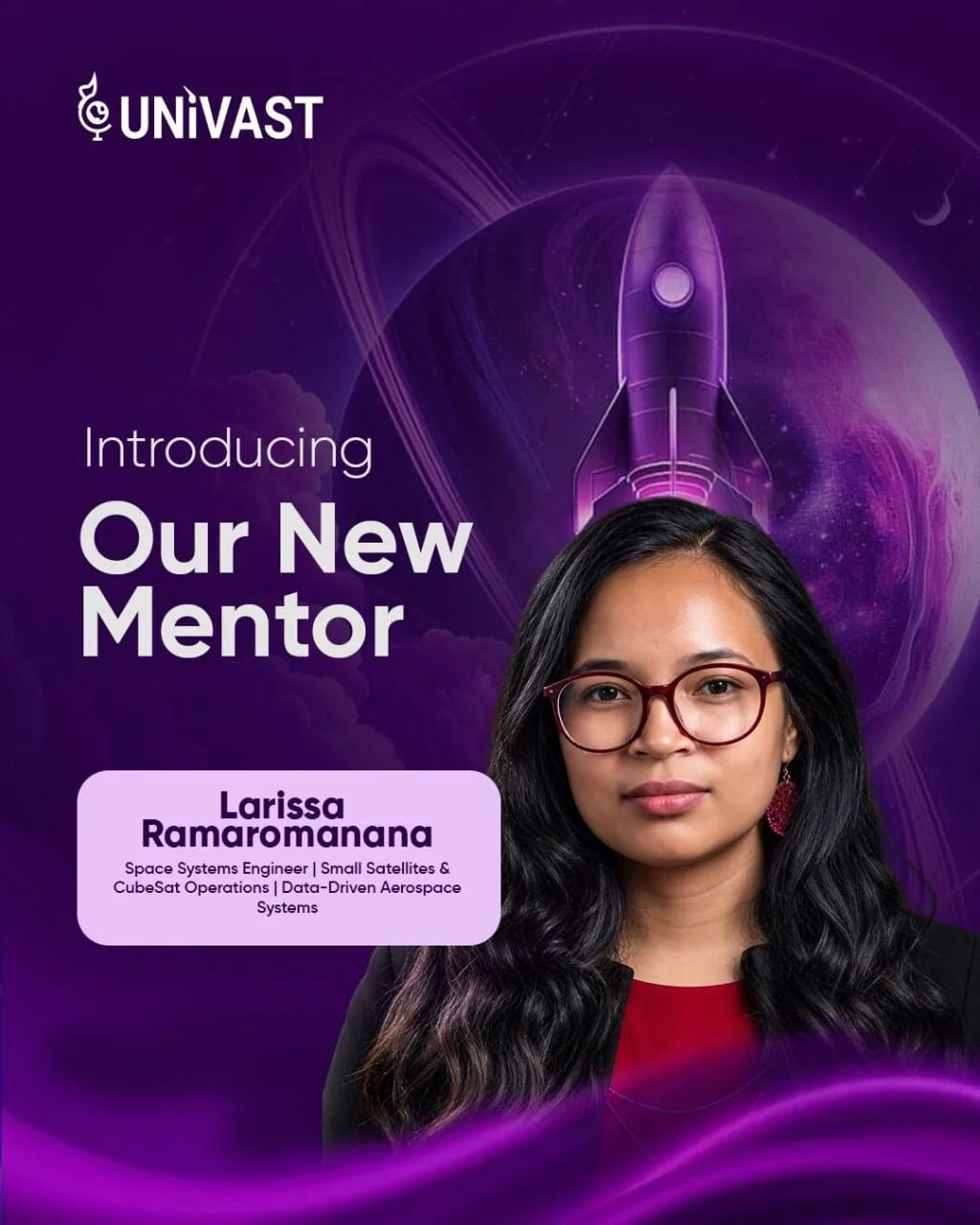
Larissa Ramaromanana
Space Systems Engineer: Small Satellites, CubeSat Operations and Data-Driven Aerospace Systems