Aerospace Engineering
Propulsion Engineer
Develops the engines and thrusters that move vehicles through air and space.
0 of 5 signature competencies evidenced. Ready means Level 3 on each.
Signature competencies
Simulation & Model Reasoning
Using models to test decisions before reality does it for you.
Not yet evidenced
Orbital Calculation
Using quantities like speed, distance and period to put numbers on motion in space.
Not yet evidenced
Risk Assessment
Weighing likelihood and consequence to decide when and how to act.
Not yet evidenced
Systems Prioritisation
Deciding what matters first when systems depend on each other and resources are limited.
Not yet evidenced
Scientific Data Interpretation
Reading charts, readings and trends to reach defensible conclusions.
Not yet evidenced
Why it matters
Propulsion sets the limits on how far, how fast and how heavy a mission can be.
Technical foundations
- Fluid dynamics
- Combustion
- Test instrumentation
Mentors in this field
UNIVAST mentors with experience relevant to becoming a Propulsion Engineer.
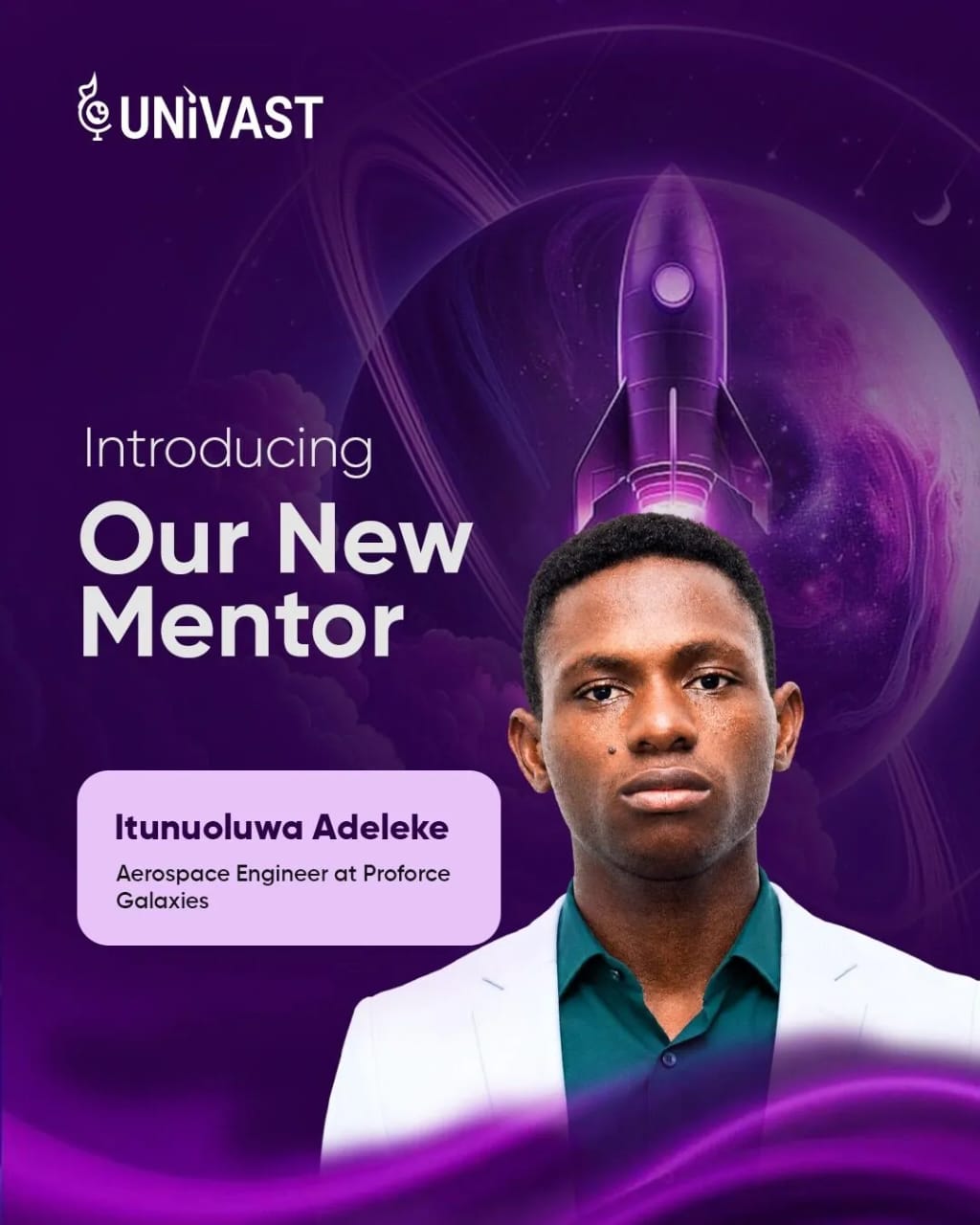
Engineering
Itunuoluwa Adeleke
Aerospace Engineer, Proforce Galaxies